

 PlayOn
What to Decide Before Winter 2026 Tip-Off: A Gate-Day Guide for Athletic Directors
 PlayOn: Oct 20, 2026, 11:26:00 AM
Published: October 20, 2026 | Updated for the 2026-2027 high school winter season
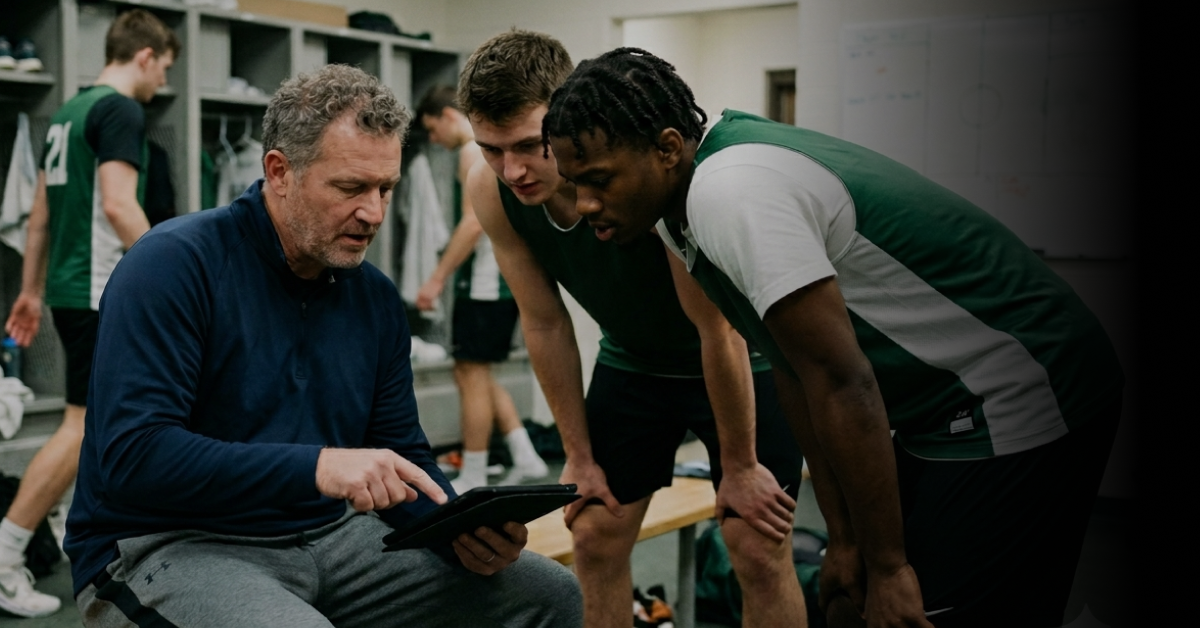
Sunday morning. You've got film up. You're in the third quarter, pausing on the same defensive breakdown for the second time, making notes, building the week's teaching points. The film is doing exactly what it's supposed to. It's showing you what went wrong and giving you something to fix. That's what film has always been for. But somewhere on the other side of that same footage while you're tabbing between timestamps — parents are pulling up the replay, a grandfather three states away is watching the second half on demand, a club coach is cross-referencing your junior's stats on MaxPreps against what he saw on the broadcast Friday night.
You didn't have to do anything extra to make any of that happen. Which raises the question most coaches never think to ask: if the film is already working after you're done with it, how much more could it be doing?
Most coaching workflows are built around a single idea: the film session.
Capture the game. Get it uploaded. Review it with the team. Build practice around what you find. That sequence is efficient, but also incomplete. Not because anything is missing from the coaching side, but because it treats the end of the game as the end of the film's usefulness.
The moment the final buzzer sounds, the same footage that will live in your film queue is becoming a broadcast archive on the NFHS Network, a data point on MaxPreps, a highlight waiting to be shared, and the foundation of next week's promotion. All of that is already in motion before you've broken down the first play.
The film doesn't stop working when you close the tab. Most programs just never had a reason to notice.
For athletes: When a game streams through NFHS Network and stats flow into MaxPreps, your athletes are being seen in real time when it matters most for recruiting conversations— not in a highlight package assembled at the end of the season. A scout doesn't have to wait for a film request. They can search by sport, position, and region, find the profile, and watch the game from Friday. The work you already put in to prepare your team just became the material a recruiter is evaluating.
For families: Not everyone is in the stands. Parents who travels for work, grandparents in another state, the alumni who moved away but still care — they're watching on the NFHS Network or on demand. The broadcast your players competed in is the same one that keeps those connections alive. You didn't have to build a separate product for them. The game did it automatically.
For the program: Every stream is also an asset for what comes next. Highlights from the broadcast become the clip that goes out before the next game. The score that updates on MaxPreps becomes the story your athletic director can carry into the following week's promotion. The footage your assistant coaches are already reviewing is the same material Fan Zone can pull from to surface graphics and shareable content before Thursday night arrives.
None of this requires a separate workflow.
Here's a way to think about what's at stake. There's a fan who almost made it to Friday's game. Work ran late. They got there in the third quarter, caught the end, and left before the final buzzer. They didn't see your junior's big play in the second. They don't know the comeback almost happened.
That fan goes home with an incomplete picture. Maybe they catch the score somewhere. With a connected workflow, they pull up the NFHS Network replay that night. They watch the whole second quarter. They share a clip with a friend who went to the school a decade ago. That friend follows the program for the rest of the season.
You didn't do anything extra. The game was already captured. The broadcast already existed. The only difference is whether it goes somewhere after the final whistle or sits in a queue until Sunday's film session. The fan experience, how families and communities stay connected and invested is a byproduct of the same infrastructure you're already using to coach. Most programs just haven't made the connection yet.
After the final whistle, here's what's already in motion when the pieces are linked:
The coach pulls up film the next morning through MaxPreps Advantage — organized, time-stamped, and ready to assign to athletes. No chasing files or duplicate uploads. The same footage they're reviewing for teaching points is the same footage an athlete can access in their player profile.
The athlete has a MaxPreps profile that reflects what actually happened Friday night: stats, game context, and video that recruiters can find and evaluate without a separate film request. Their visibility is being built in real time.
The family who couldn't make it opens the NFHS Network that evening. The game is there. They watch and share it.
The athletic director comes in Monday morning and the post-game content is already working. The final score is posted. Highlights from the stream are ready to surface in Fan Zone. A matchup graphic for next week's game is one step away. The promotion isn't starting from scratch, it's starting from what the game already created.
One game. Four different kinds of value. The same footage at the center of all of it.
Coaches don't need more tools. They need workflows that let the tools they already have do more.
The film you captured Friday night is already doing more than coaching. It's building profiles, reaching families and laying the foundation for next week. The only question is whether your program has the structure to let all of that happen, or whether it stops at the film session.
You're already capturing the game and running the broadcast. What's left is making sure it shows up somewhere bigger than Sunday morning film review.
See how NFHS Network, MaxPreps Advantage, and PlayOn HQ work together to get more out of every game your program plays.
Schedule a walkthrough with our team

 PlayOn: Oct 20, 2026, 11:26:00 AM
Published: October 20, 2026 | Updated for the 2026-2027 high school winter season
.jpg) PlayOn: Oct 16, 2026, 2:02:45 PM
PlayOn: Oct 16, 2026, 2:02:45 PM
Published: October 16, 2026 | Updated for the peak 2026 high school football season
 PlayOn: Oct 12, 2026, 10:05:57 AM
Friday night football has a ticket plan. Everything else on your calendar often runs on a cash box, a clipboard, and somebody's spreadsheet. You're...